
Use case · Market research
Hear why customers buy,
not just what they picked
Multiple-choice surveys tell you which option won. They rarely tell you why. Send one link and let an AI interviewer talk with each consumer about what drove the purchase, what they like and what frustrates them, then read the transcripts and summaries.
Free plan · 5 interviews · 10 min total · no card

The problem
Surveys scale, depth doesn’t
Research teams usually have to choose between many shallow answers and a few deep ones.
Checkboxes hide the reason
“Price” or “quality” on a survey can mean ten different things. Without the story behind it, the next decision is still a guess.
Live interviews don’t scale
Scheduling, moderating and note-taking for each one-hour call means most studies stop at a handful of people.
New markets, new languages
Testing a product in another country usually means hiring local moderators before you learn anything.
How it works
From research brief to transcripts in days
- 1
Describe the study
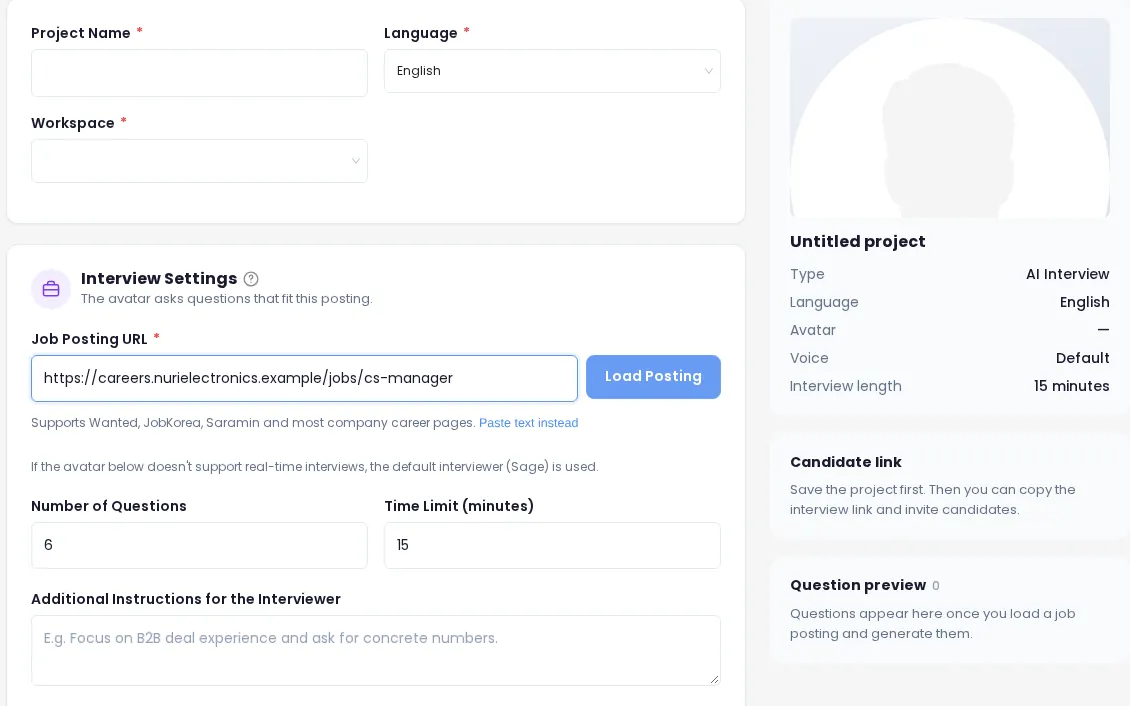
Paste a short brief: who you want to hear from and what you need to learn. AI Interview drafts questions from it. Rewrite them, add your own and give the interviewer extra instructions, such as “ask for a recent example”.
- 2
Try it as a respondent
Take the interview yourself once. Hear how each question sounds out loud and cut anything leading or confusing.
- 3
Send one link
Share the link with your panel, customer list or community. Respondents join in a browser without an account, whenever it suits them, in any of 12 languages. On paid plans, invite a list at once and send reminders.
- 4
Read, export, decide
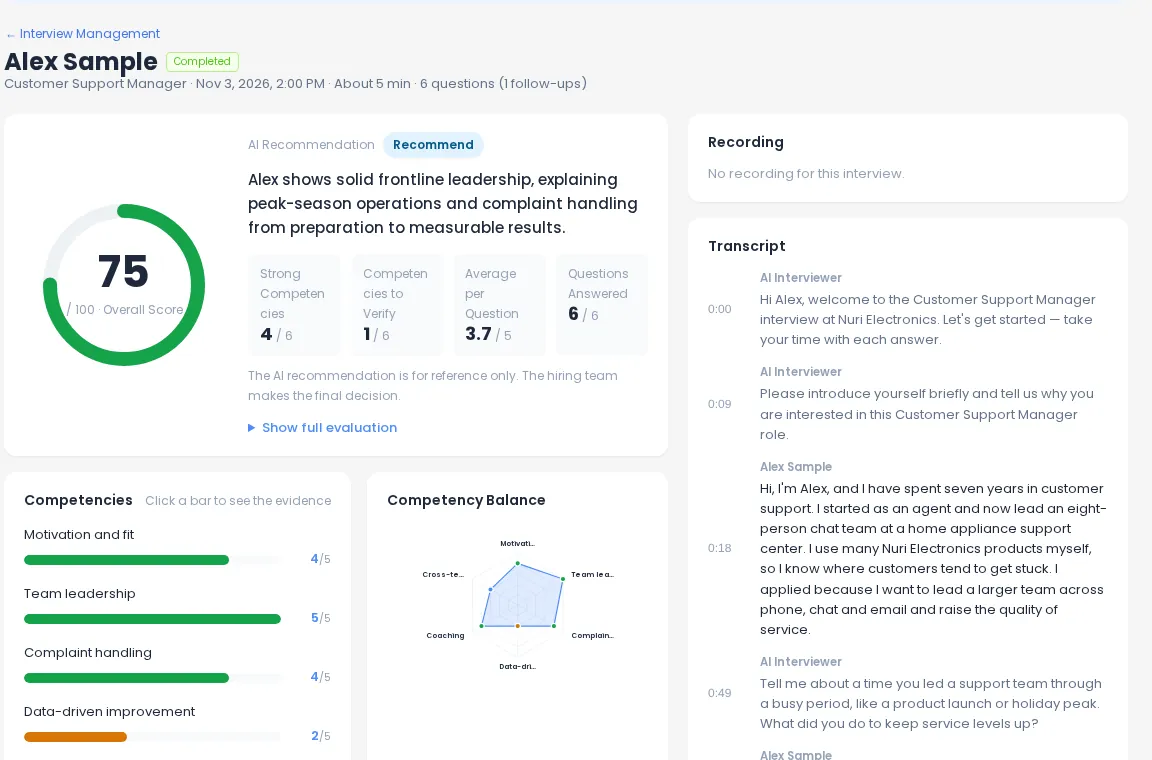
Each interview leaves a recording, a full transcript, a summary and highlighted answers. Export to CSV and group the answers with your team.
Example question set
Questions that get past “it was fine”
A starting point for a consumer purchase study. Edit freely; the AI interviewer asks one follow-up when an answer stays vague.
- Tell me about the last time you bought a product in this category. What was going on that made you start looking?
- Which options did you consider, and what made you choose the one you bought?
- What almost stopped you from buying it?
- What do you like most about it now that you’ve used it for a while? Can you give an example?
- What frustrates you about it, or about products like it?
- If you could change one thing about it, what would it be and why?
Depth at scale
Every respondent gets a real conversation
The AI interviewer asks each question out loud, listens, and asks one follow-up when an answer is vague. Every respondent hears the same questions in the same order, so answers are easy to compare across dozens of interviews.
- Questions drafted from your brief, fully editable
- One follow-up question when an answer stays vague
- 12 interview languages for multi-market studies
Ready for analysis
Transcripts and summaries instead of a pile of recordings
Open any interview to read the summary first, then the highlighted answers, then the full transcript next to the recording. Export everything to CSV and bring it into the spreadsheet or research tool your team already uses to code and group answers.
- Summary and key answer highlights per respondent
- Recording and full transcript side by side
- CSV export and share links for stakeholders
When to upgrade
Pilot on Free, scale your study on a paid plan
Prices are public, monthly or annual (20% off). Upgrade by card when the pilot works.
Free: pilot the guide
5 interviews · 10 minutes total, one-time. Enough to test your questions with a few people and fix what doesn’t work.
Recruiter: run the study
40 interviews a month, interviews up to 60 minutes, bulk invites with reminders, and CSV/PDF export for analysis.
Hiring Team: research together
150 interviews a month, 5 seats, and team comments on every interview. Extra interviews are $1.5 each.
Market research FAQ
How is this different from an online survey?
A survey gives you the option someone picked. An AI interview asks an open question, listens, and asks a follow-up when the answer is vague, so you hear the reason behind the choice in the respondent’s own words. Many teams use both: a survey for the numbers, interviews for the why.
Do respondents need an account or an app?
No. They open one link in a browser, at a time that suits them, and answer an AI interviewer by voice. Interviews can run in 12 languages.
The app talks about job postings and candidates. Will that confuse my study?
The product started as an interview tool for hiring, so some screen labels still use hiring terms. Where it asks for a job posting, paste your research brief instead: who you are talking to and what you want to learn. Then review and rewrite the drafted questions so they read like a research interview.
Does it sort answers into themes for me?
Not automatically. Each interview comes with a full transcript, a summary and highlighted answers. On paid plans you can export results to CSV and code or group them in your own spreadsheet or research tool.
How many interviews can I run?
Free includes 5 interviews · 10 minutes total (one-time) to try a pilot. Recruiter includes 40 interviews a month and Hiring Team 150, with extra interviews at $1.5 each.
Can my team read the interviews?
Send a result share link that opens without sign-in until it expires. If several researchers review together, Hiring Team includes 5 seats and team comments.
Find out why, not just what
Write a short brief, send one link, and read your first consumer interviews today.